
Indigenous and Monacan Stewardship: BCE 1200 BC – CE 1750s
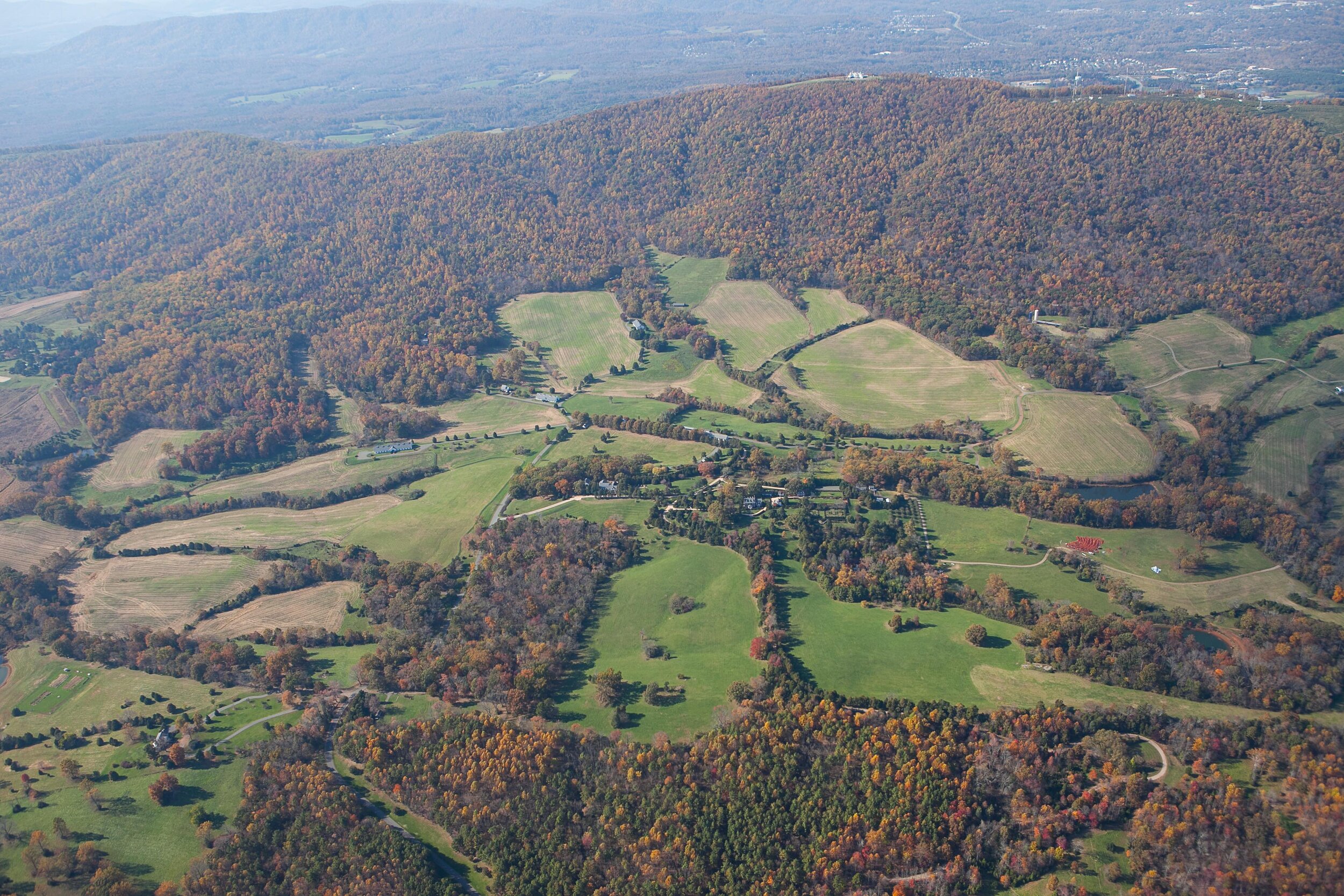
The land described as “Indian Camp” in the 18th and early 19th century, and known today as Morven was once inhabited by Indigenous people for several thousand years prior to European colonization. The Monacan Tribe was the last Indigenous community that lived, cultivated, and hunted at Morven, and the Monacan people still recognize it as part of their ancestral homeland.
The Monacan capital, Rassawak, was located 20 miles downstream from Morven where the Rivanna River meets the James River. This seasonal residence, one of many “Indian Camps” in the Virginia Piedmont, was a conscious cultural adaptation to colonization within the James River watershed. European settlers recognized the signs of Indigenous presence and cultivation of the landscape, evidenced by nearby names such as “Indian Camp,” “Indian Village,” and “Indian Garden.”
Between 2009-2011, UVA sponsored Morven archaeological investigations undertaken by a collaborative team of UVA, Monticello, and Washington and Lee University faculty and students as well as Rivanna Archaeology. These teams identified three sites with prehistoric and historic-era land uses and occupation within the Indian Camp Creek valley that runs along Morven’s southern boundary. Historians theorize that Monacans traveled to this land from their villages along the Rivanna River and James River as part of their seasonal hunting patterns, possibly also cultivating crops, grains, nuts, and fruit. The large assortment of paw paw groves that can be found atop Morven’s ridgeline may be one example of the remnants of Monacan stewardship. While our current understanding of Monacan presence at Morven remains incomplete, future research, in collaboration with the Monacan Nation, offers the possibility of gaining insight on how Indigenous people managed, cultivated and cared for this landscape.
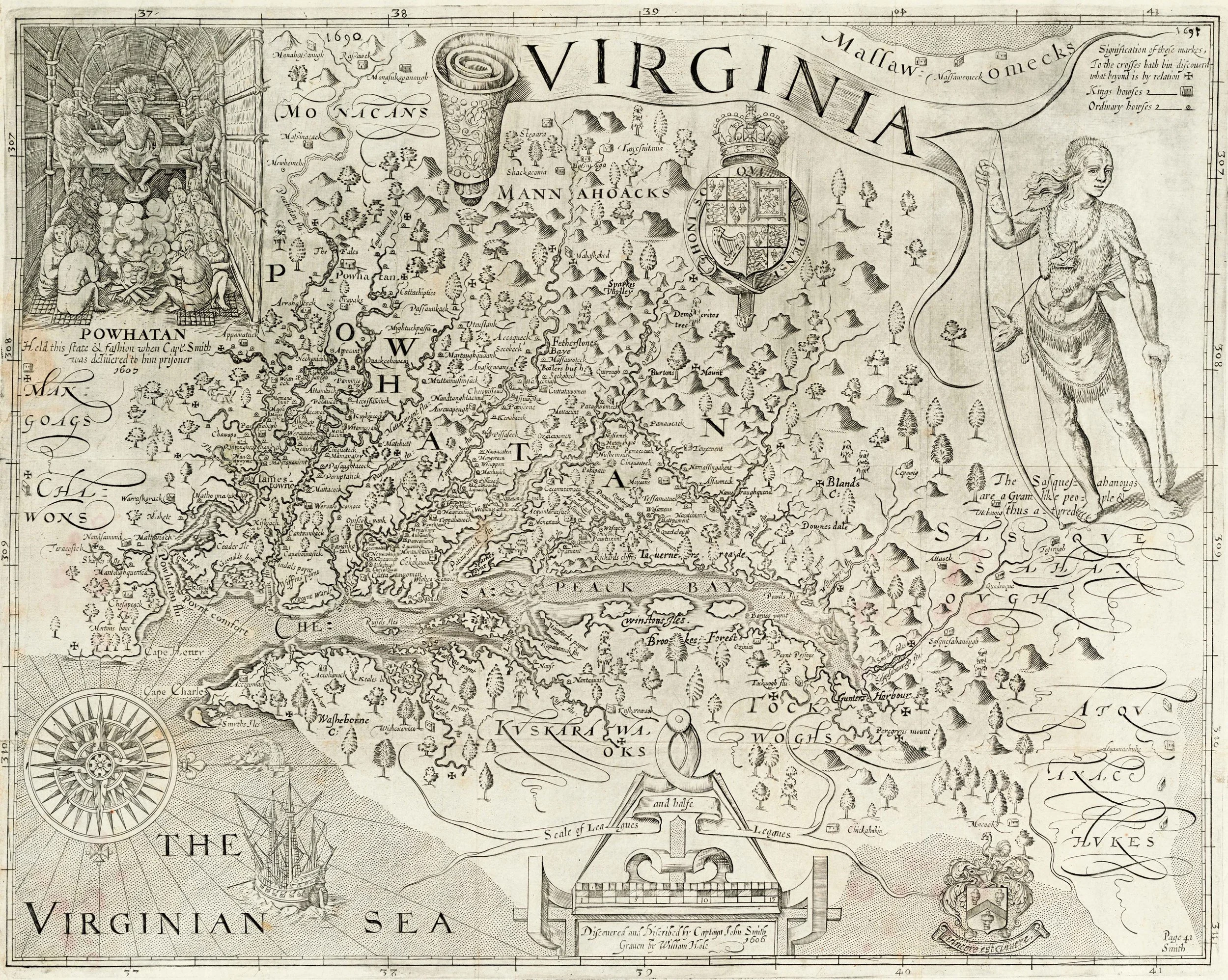
John Smith, A Map of Virginia, 1612, University of Virginia, Tracy W. McGregor Library of American History.